How do I improve my poker hand rankings?
Understanding the Basics of Poker Hand Rankings
Before diving into strategies for improving your poker hand rankings, it is crucial to have a solid understanding of the basic hands. Poker hands are ranked from the highest to the lowest, with specific combinations determining the strength of each hand. This hierarchy lays the foundation for understanding the game better and making informed decisions during play.
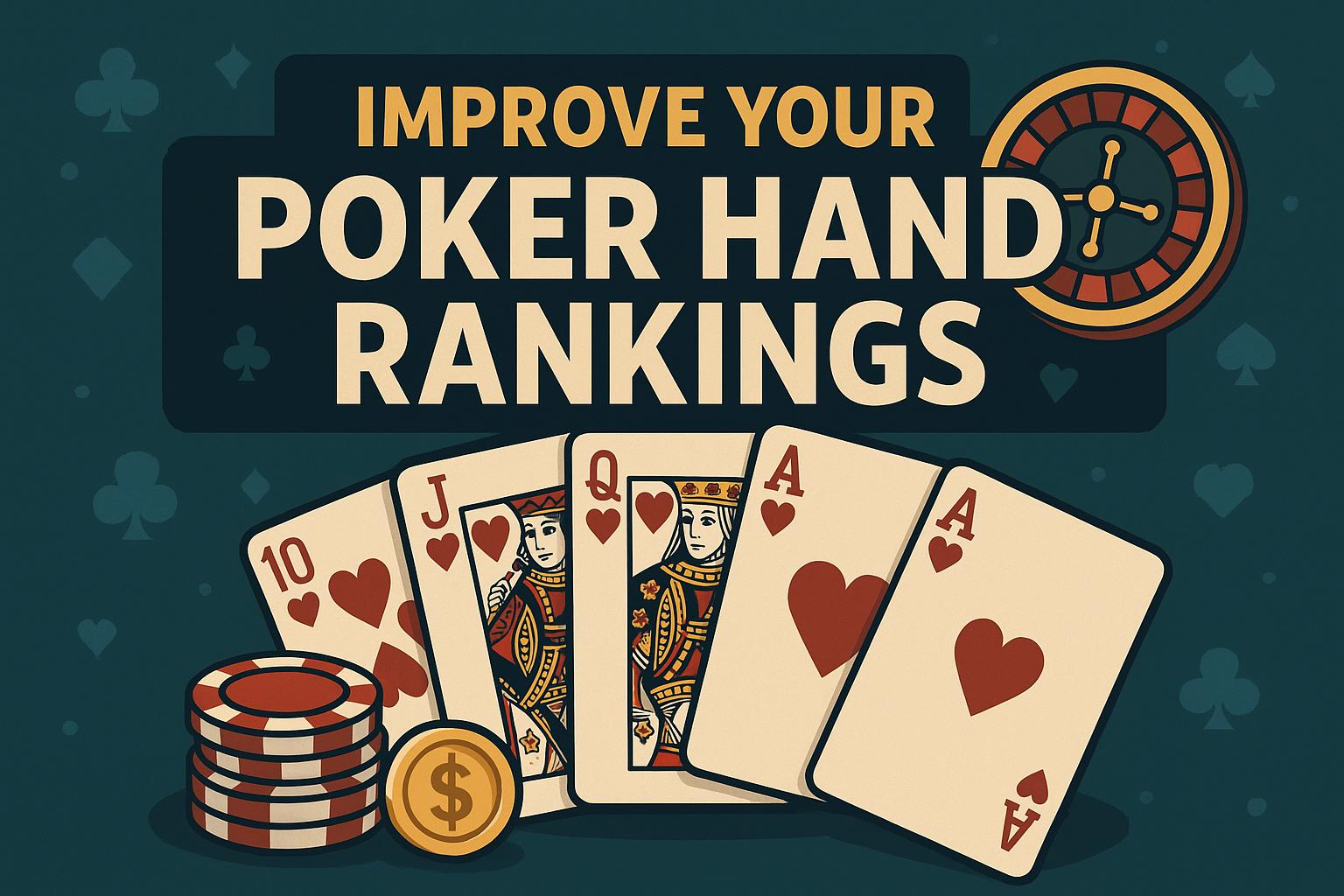
A Royal Flush is the strongest hand in poker. It comprises an ace, king, queen, jack, and ten, all of the same suit. This combination is unbeatable and, thus, holds supreme power in the hierarchy of poker hands. Following the Royal Flush is the Straight Flush, which includes any five consecutive cards of the same suit. An example would be a sequence of five to nine, all hearts. This hand is rare and very powerful but not as strong as a Royal Flush.
Subsequently, a Four of a Kind, also known as Quads, consists of four cards of the same rank. For example, four queens or four sevens. While quite formidable, this hand still falls under the Straight Flush in terms of ranking. Next in line is the Full House, which combines three cards of one rank and two cards of another, such as three eights and two kings. It’s a strong hand and outranks both a Flush and a Straight.
The Flush is another notable hand, involving five cards of the same suit but not in sequence. An example might be five random heart cards. This configuration is strong and valuable in play. Then there is the Straight, made up of any five sequential cards of differing suits, such as a sequence from four to eight. While simpler than a Flush, it maintains its importance in the rankings.
Moving further down the ladder, a Three of a Kind comes into play. This includes three cards of the same rank, such as three aces. This hand is not as mighty as a Straight but still holds more weight than Two Pair. Following this is the Two Pair, which, as the name suggests, is made up of two pairs of cards of the same rank. An example would be two jacks and two fives.
The penultimate hand is a Pair, involving two cards of the same rank, like two kings. Finally, when no player has any of these hands, the High Card decides the winner. When all else is equal, the highest card in the player’s hand determines the win.
Familiarizing yourself with these rankings is the foundation upon which you can build more advanced strategies. Only with a clear understanding of how each hand stands in terms of strength can you effectively strategize and craft winning tactics.
Developing a Strategy
Once you have a firm grasp of hand rankings, developing a strategic approach is essential for improving your gameplay. Start by building basic poker strategies, which encompass several critical aspects of the game. Firstly, understand pot odds. This involves calculating the odds of completing a hand based on the current pot size and your betting costs. By understanding pot odds, you can decide when it is mathematically profitable to call a bet.
Next, learn to read your opponents. Observing their tendencies and betting patterns can provide insight into their strategies, exposing weaknesses you can exploit. Some players may bluff often, while others only bet strong hands, recognizing these patterns enriches your strategic playbook.
Additionally, knowing when to fold is fundamental. Recognizing when your hand has little chance of winning and folding early saves chips and keeps your stack steady throughout the game. As you progress, work on enhancing these basic strategies and incorporate more advanced concepts like bluffing—projecting confidence in a hand that may or may not be strong to intimidate opponents—and position play, using your seat at the table to your advantage.
Practicing Consistently
Consistent practice is a key component of improving your poker skills. Participate in a variety of games, both online and offline, to gain experience. The benefits of online platforms are manifold, providing a diverse array of opponents and scenarios. These interactions can significantly contribute to honing your skills as you encounter varying playing styles.
Moreover, consider using simulation software or resources designed for practicing specific scenarios. These tools allow you to repeatedly engage with certain situations, refining your decision-making processes and reaction times without the pressure of a live setting.
Analyzing Your Play
Regularly analyzing your hands and decisions can shed light on areas in need of improvement. After every game, take a moment to review past moves. Was there a better way to play a certain hand? Could you have ranked your hand differently?
Look for patterns in your mistakes or decisions. Discerning these patterns leads to better understanding whether they stem from a misunderstanding of hand rankings or strategic errors. By consistently assessing your play with a critical eye, you create an opportunity to develop insights into where adjustments are necessary.
Seeking Expert Guidance
Alongside personal analysis, consider engaging with expert resources or joining poker communities to expand your understanding. Many professional poker players share insights through tutorials, articles, or forums. By connecting with experienced players, you can gain valuable perspectives on enhancing your hand rankings.
In addition, trustworthy sites often provide this kind of advice, along with practical examples and tips. These resources can help refine strategies, decide which hands to play, and when to take risks. Therefore, taking advantage of these types of assistance could be highly beneficial.
By consistently applying these strategies and maintaining a commitment to learning and practice, you can gradually improve your poker hand rankings. Remember, poker is as much a game of skill as it is of chance, and enhancing your skills can significantly influence your outcomes. With patience and persistent effort, any player has the potential to achieve greater proficiency in the game.