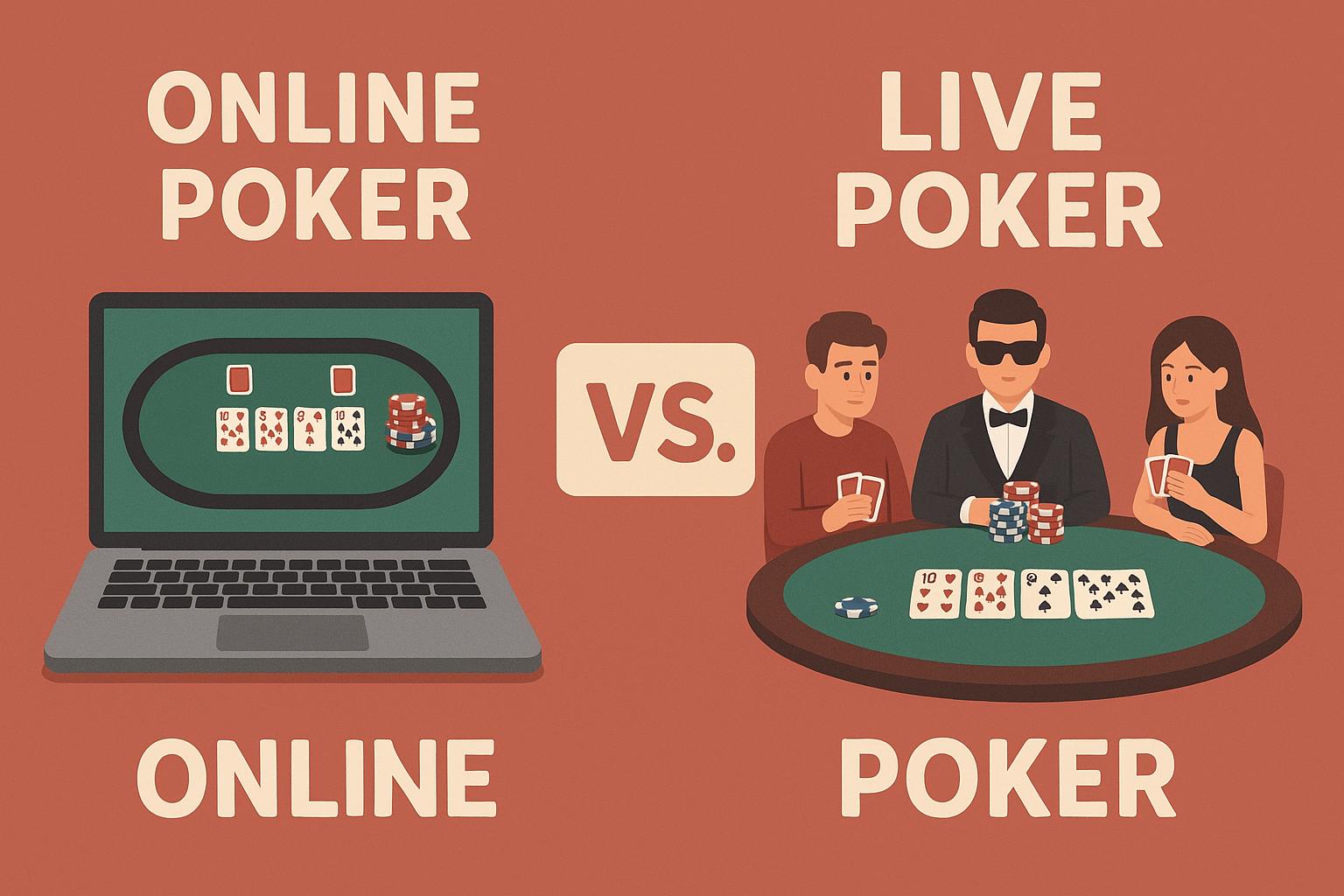
Is online poker different from live poker?
Understanding the Differences Between Online and Live Poker
Poker, a game that intricately weaves skill, strategy, and chance, has traversed the sands of time, remaining a beloved pastime in its many iterations. The digital age has propelled poker into a new realm, providing players across the globe access through the internet. Despite adhering to the core principles and rules, online poker and live poker manifest distinct differences that impact the dynamics of play and perception.
Accessibility and Convenience
Perhaps one of the most profound distinctions between online and live poker lies in the realm of accessibility. Online poker seamlessly integrates convenience into the lives of its players, allowing participation from the comfort of one’s own home. This wide-reaching platform breaks geographical barriers, granting individuals around the world the freedom to engage in poker games at any hour. This is especially advantageous for those residing far from traditional poker venues such as casinos or dedicated poker rooms, as it eliminates the necessity of physical proximity.
In contrast, live poker necessitates the physical presence of players, confining them to specific locations where games are held. This requirement can impose limitations regarding time and travel, as players must allocate resources to reach these venues, which may not be readily available in their vicinity. Consequently, for individuals seeking a more authentic or socially engaging experience, live poker may demand a commitment that online poker does not.
Game Speed and Multi-Tabling
The tempo at which the game unfolds marks another divergence between online and live poker. Online poker is characterized by its swift pace, attributable to the absence of manual shuffling and dealing of cards. Moreover, online platforms often implement time restrictions for players’ decisions, expediting the flow of the game. This streamlined process caters to those who relish rapid gameplay and efficient resolutions.
A unique advantage of online poker is the capacity for multi-tabling. Experienced players can immerse themselves in multiple games concurrently, optimizing their engagement and potential returns. This feature, detailed further on various platforms like multi-tabling, remains unattainable in a live poker environment, where attention is focused on a single table.
Player Interaction and Tells
The realm of player interaction undergoes a notable transformation between live and online poker settings. In live poker, participants are physically situated around a table, facilitating a direct face-to-face encounter. This arrangement permits players to interpret physical tells and scrutinize opponents’ body language, a skill integral to many live poker strategies. The tangible environment adds layers of complexity to gameplay, where psychological acumen can influence outcomes.
Conversely, online poker lacks this facet of personal interaction. The digital format precludes reliance on physical cues, compelling players to channel their focus toward analyzing betting patterns, timing, and other aspects of gameplay to deduce information about rivals. This adaptation necessitates an acute attentiveness to the nuances of the game beyond mere physical gestures.
Game Variations and Stakes
The spectrum of game variations and stakes constitutes another area where online poker platforms surpass many live poker rooms. Online arenas offer a plethora of options, ranging from micro-stakes tables to those catering to high rollers. This extensive array accommodates a wide spectrum of players, allowing exploration of diverse styles and strategies that align with individual preferences and financial capacities. Websites often elaborate on these variations, such as game variations and stakes, offering players a comprehensive understanding of what to expect.
Live poker, while vibrant in its own right, may not always provide the same breadth of choices, as logistical constraints and venue-specific offerings could limit availability. For players seeking a particular format or stake, the digital environment often affords greater flexibility.
Security and Fair Play
Security and fair play are pivotal considerations across both poker formats, albeit with distinct challenges. Live poker players face the task of assessing the game’s integrity, ensuring that it is conducted legitimately. While regulated casinos strive to uphold these standards, the possibility of foul play cannot be entirely disregarded. Vigilance remains crucial to safeguarding the fairness of the game.
Online poker ventures into an additional layer of complexity with digital security concerns. The secure functioning of the platform’s software, the prevention of technological cheating, and the protection of player accounts demand sophisticated solutions. Reputable online environments employ advanced technologies and undergo rigorous audits, aiming to provide an equitable and secure gaming experience.
Conclusion
In sum, the worlds of online and live poker each present their own array of advantages and challenges, molding the games into distinct experiences. Ultimately, the choice between the two is rooted in personal preference. Some players are drawn to the convenience and rapidity of online poker, appreciating its modern accessibility and technological enhancements. Conversely, others may find fulfillment in the social engagement and traditional ambiance that live poker affords.
By comprehending these differences, players can make informed decisions aligned with their gaming inclinations and lifestyle considerations. Understanding the varied aspects of each format empowers players to navigate the dynamic landscape of poker, enriching their engagement with this timeless game.