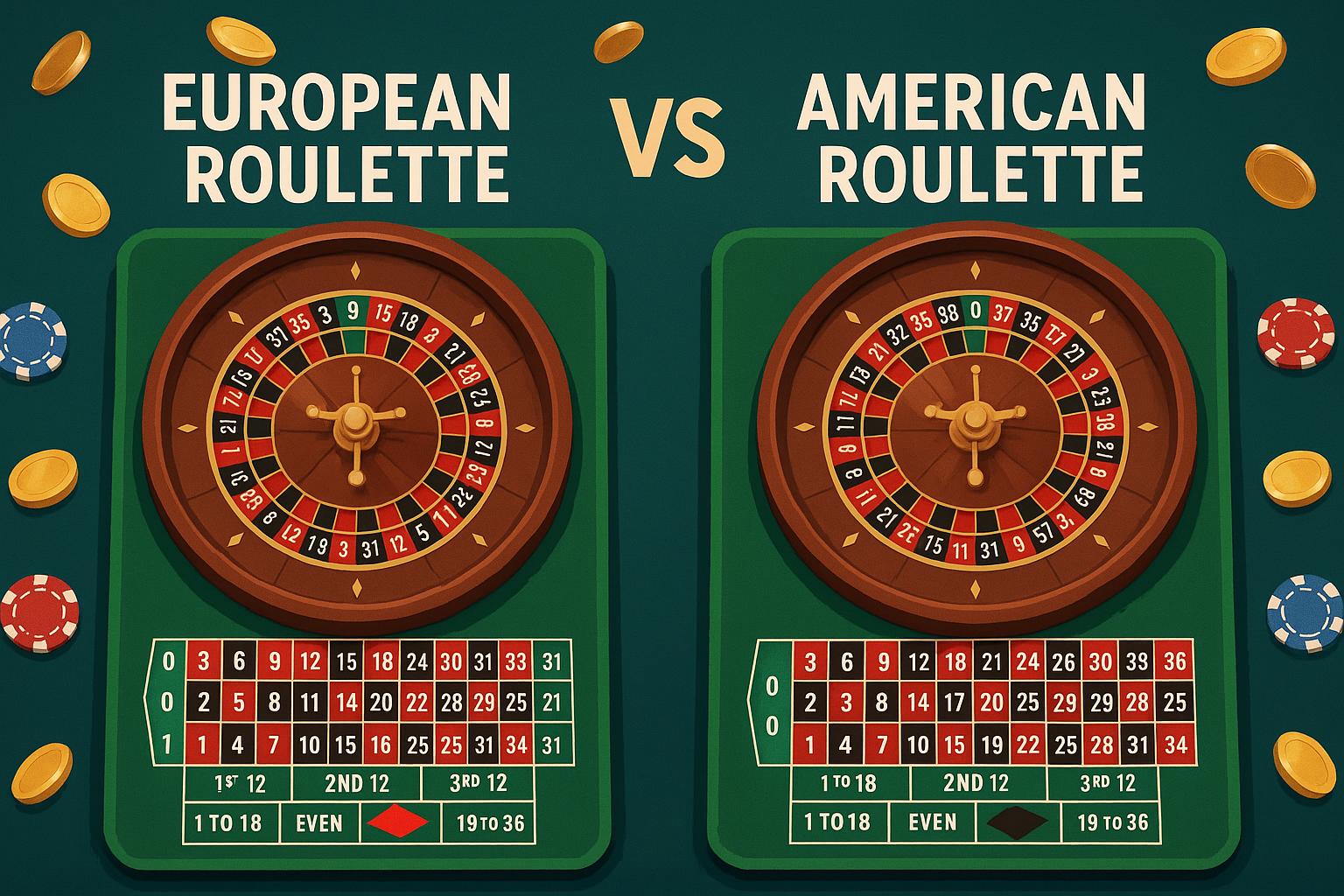
What’s the difference between European and American roulette?
Introduction to Roulette
Roulette is a renowned casino game with deep roots in gambling history, captivating enthusiasts across the globe. The core appeal of roulette lies in its simplicity; the game revolves around a spinning wheel and a small ball. Despite the uniformity in the game’s essence, the intricacies between its variations, primarily the European and American versions, affect not only the gameplay but also the overall player strategy. To strategize effectively, players must delve into these differences.
The Wheels: European vs. American
Roulette wheels are at the heart of this game, dictating not just aesthetics but also altering the game’s dynamics and outcomes. The discovery of differences in these wheels’ construction is crucial for any serious player.
The European Wheel carries 37 pockets, emblazoned with numbers spanning from 0 to 36. This nuanced design helps in maintaining a nearly egalitarian equilibrium between the risk and reward factors, thus keeping the spirit of chance at the forefront.
On the other hand, the American Wheel introduces an additional element of unpredictability with 38 pockets, housing numbers from 0 to 36 along with two extra slots: single zero (0) and double zero (00). This singular addition seems minor yet considerably shifts the trajectory of winning possibilities and doctrines that guide the game.
Implications of the Zero
The integration of a double zero in the American version is far from a mere cosmetic distinction; it deeply impacts the critical component known as the house edge. In European roulette, the solitary zero sets the house edge at approximately 2.7%, providing a relatively favorable environment for the player.
By contrast, American roulette, with its dual-zero configuration, escalates the house advantage to around 5.26%. This incremental rise is not trivial and should sway the decision-making process for players weighing their odds and the potential returns on their efforts. The variance in house edge fundamentally alters the roulette experience, asserting a slant that especially skilled players must account for in forming successful strategies.
Betting Options
Roulette is famed for its diversity in betting styles, allowing ample room for varied approaches. Players often opt to place bets on single numbers, color delineations (red or black), or on number types (odd or even). These traditional options lay a foundational strategy for players.
The American version’s inclusion of the double zero gives rise to unique betting patterns. One such offering is the five-number bet, an exclusive feature covering numbers 0, 00, 1, 2, and 3. This exclusive bet, absent in European roulette, introduces added complexities and could broaden the strategic landscape for players. Each variation in betting motifs demands a tailored approach; understanding these specifics can refine a player’s tactic considerably.
En Prison and La Partage Rules
European roulette stands as a paragon of player-favorable rules, in part due to its additional house regulations, namely En Prison and La Partage. These rules are particularly beneficial for enhancing a player’s potential gains.
The En Prison rule is an attractive proposition for even-money bettors. When the ball lands on zero, a player’s bet is not immediately lost. Instead, it is held “in prison” for a subsequent round, offering a chance at redemption. Should fortune favor the player in the next round, the original stake is returned unharmed.
Similarly, the La Partage rule aids players by reclaiming half of their even-money bet when the ball rests on zero. This rule further skews the odds in favor of the player, thereby subtlety diminishing the house edge. These strategic elements distinguish the European version significantly, making it enticing for those calculating their paths to potential victory.
Aesthetic and Layout Differences
The visual and physical arrangement of roulette tables resonates with players on differing levels. Unlike the pragmatic considerations of wheel differences, aesthetics and layout provide an emotional and atmospheric ambiance unique to each version.
European tables are characterized by their minimalist and streamlined arrangements, focusing on clarity and ease of use. This straightforward design enhances both functionality and the player’s capacity to engage with the game seamlessly.
Conversely, the American table introduces layers of complexity with its elaborate layout, accommodating the additional betting options linked with the double zero. This complex approach can influence the player’s perspective on the game’s intricacy and immersion.
Conclusion
In conclusion, when faced with the choice between European and American roulette, players must evaluate both the game’s probabilistic factors and their personal gaming preferences. European roulette typically offers more favorable odds with its single zero, alongside special rules like En Prison and La Partage that can slightly tip the scales towards the player. Alternatively, American roulette’s heightened house edge, due to the double zero, presents a distinct challenge, forcing players to adapt their strategies accordingly.
A thorough comprehension of these differences is indispensable for players looking to optimize their gaming strategies and align them with their desired casino experience. Exploring deeper into the nuances of roulette can be enlightening and rewarding. For expanded insights and strategies on roulette, visit Roulette Strategy Tips.
