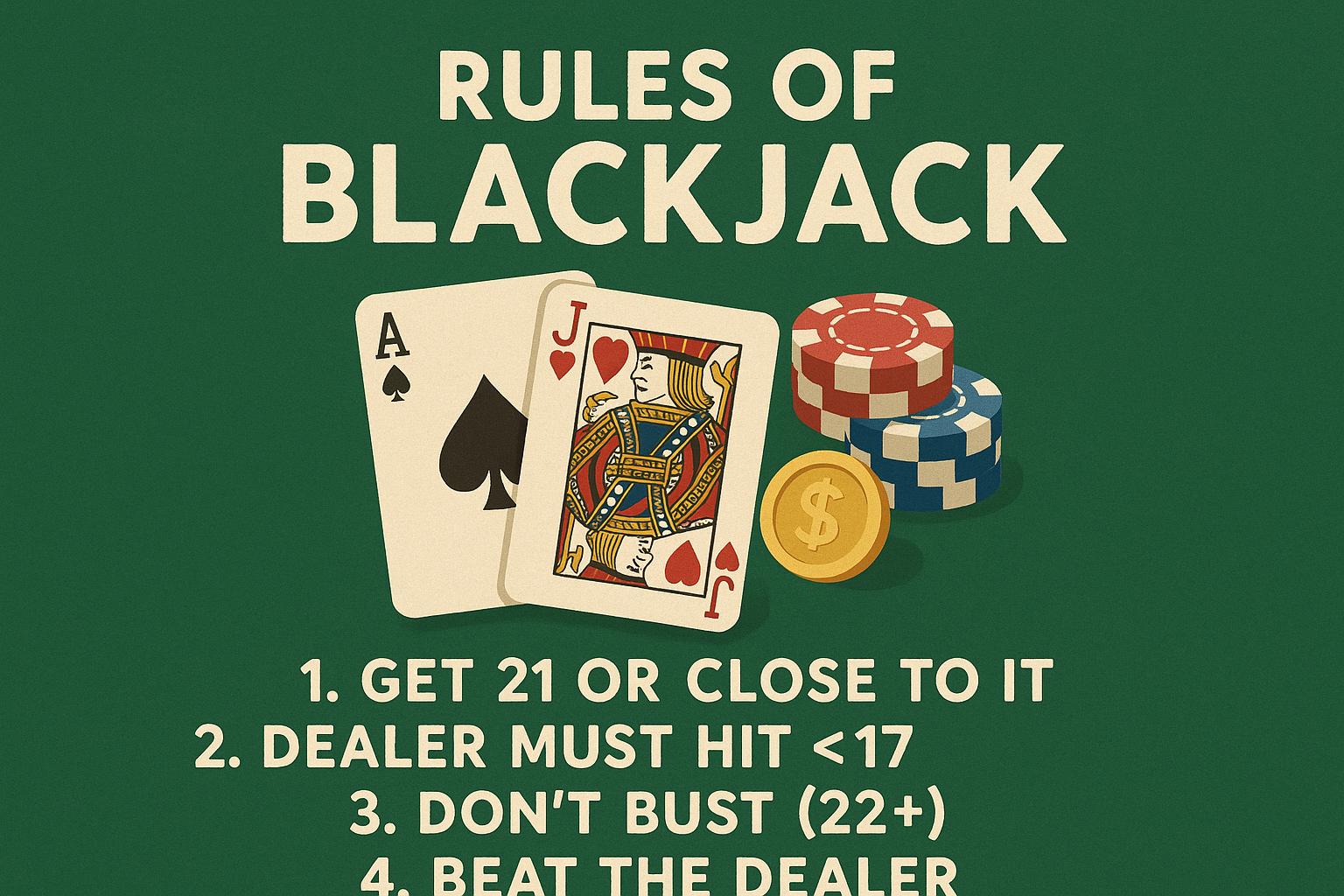
What are the basic rules of blackjack?
Overview of Blackjack
Blackjack, also known as 21, is a prominent card game with a strong presence in the world of casinos. Its enduring popularity stems from a blend of strategy, chance, and entertainment. The primary aim in Blackjack is to amass a hand value that is closer to 21 than that of the dealer while ensuring it does not exceed 21.
Basic Gameplay
The game begins with each participant receiving two cards. Typically, players’ cards are dealt face-up, allowing others at the table to see them, whereas the dealer’s hand consists of one face-up and one face-down card, creating an element of mystery. Card values are straightforward: numbered cards bear their face value, face cards—Jack, Queen, and King—each hold a value of 10, and the versatile Ace can be valued at either 1 or 11, depending on the composition of the hand.
Player Actions
At the core of gameplay is a variety of choices available to players, influencing the outcome of each round:
Hit: Opting to ‘hit’ involves the request for an additional card to the player’s existing hand. This decision can be repeated multiple times, providing flexibility and risk, as the cumulative card value must remain at or below 21 to avoid a ‘bust’.
Stand: Choosing to ‘stand’ indicates satisfaction with the current hand value, prohibiting the player from drawing additional cards.
Double Down: This option allows players to double their initial wager post the initial deal, in exchange for being bound to accept just one additional card before they must ‘stand’.
Split: If dealt a pair, players may opt to ‘split’ the pair into two distinct hands. This maneuver necessitates an additional wager mirroring the initial bet. Each new hand is then treated independently in play.
Surrender: Some game variants offer a ‘surrender’ option, letting players concede the round by forfeiting half of their bet and ending their participation in that particular hand.
Dealer Rules
While players enjoy flexibility in their actions, dealers are confined to a rigid set of rules that dictate their play strategies:
– Every dealer must continue to ‘hit’ until their hand totals at least 17.
– An Ace in the dealer’s possession can be an 11 if beneficial, unless it leads to a bust, in which case it reverts to a value of 1.
– Usually, dealers are required to ‘stand’ once they reach all types of 17, including a soft 17, which consists of a total of 17 with an Ace valued as 11.
Winning the Game
The most direct path to victory in Blackjack lies in accruing a hand value closer to—but not exceeding—21 than the dealer. Alternatively, if the dealer happens to ‘bust’, any remaining players automatically win. Standard payouts are 1:1 of the initial wager. Achieving an Ace and a 10-value card within the first two cards creates a ‘Blackjack’, rewarding players with a payout ratio of 3:2.
Tying with the Dealer
In instances where both the player and dealer achieve identical hand values, the outcome is a ‘push’. This signifies neither a loss nor a win; thus, players merely recover their initial wager without either profit or deficit.
Essential Strategies
Players can improve their chances of success through the use of ‘basic strategy’. This methodology provides guidance on optimal decisions using a matrix determinations dependent on the player’s hand juxtaposed against the dealer’s visible card. Although variations in rules per location or house can affect strategy, core principles remain largely valuable.
The internet and literature abound with resources for those seeking a deeper understanding of Blackjack strategies and its many variants. Comprehensive study of these materials can aid in enriching one’s comprehension and finesse in approaching the beloved game of Blackjack.