Monthly Archives: January 2026

Can I use strategies to win at blackjack?
Understanding Blackjack Basics
Blackjack is one of the most well-known and frequently played casino games. Known for its blend of both skill and chance, blackjack has captivated players around the globe for centuries. The objective of the game is simple: players aim to have a hand value closer to 21 than the dealer’s hand without exceeding this number. In blackjack, understanding the rules and the overarching game dynamics is crucial for any player who wishes to increase their proficiency and potentially their success rate.
The game employs a standard deck of playing cards. In blackjack, the card values are assigned specific points. Number cards, ranging from two to ten, are scored at face value. Face cards, such as the Jack, Queen, and King, hold a value of 10 points each. Aces, however, are special as they can be valued at either 1 or 11, depending on the player’s choice. This versatility makes Aces particularly valuable assets in any hand, allowing players to adjust their hand’s total value according to their strategy and the situation at hand.
Another fundamental concept is the distinction between soft and hard hands. A soft hand is any hand that contains an Ace valued as 11 without exceeding 21. Conversely, a hard hand is one without an Ace or with an Ace counted as 1, as counting it as 11 would cause the hand to exceed 21 and result in a bust.
To succeed at blackjack, players must also be familiar with the potential actions they can take during their turn. A player can hit, allowing them to request another card to increase their hand value. The decision to stand indicates that the player is satisfied with their current hand and does not wish to draw additional cards. The option to double down allows players to double their initial bet in exchange for one additional card, a move often used when a player feels confident in the strength of their hand. The choice to split can be employed when a player receives two cards of the same value, allowing them to split their hand into two separate hands, each with its own wager.
Strategies to Improve Your Chances
Although there are no guarantees in blackjack, strategic approaches can significantly enhance players’ chances of success. Among the most popular and frequently recommended strategies is the basic strategy. Derived through mathematical calculations, the basic strategy provides players with guidance on the optimal action to take based on their hand and the visible card of the dealer. When executed accurately, the basic strategy can substantially lower the house edge, giving players a better shot at winning.
Card Counting
For those looking to delve deeper into blackjack strategies, card counting offers a more advanced approach. The technique involves tracking the ratio of high to low cards remaining in the deck, providing players with insights into the likelihood of favorable cards being dealt in subsequent rounds. While technically legal, card counting is often disapproved of by casinos due to its potential to tip the odds in favor of the player. As a result, players caught counting cards may be asked to leave the casino, or even banned from future play. Despite these potential risks, card counting remains a popular method for seasoned players seeking to sharpen their competitive edge. Successful card counting requires patience, practice, and precision, but can pay off in the long run when applied diligently.
Avoiding Common Mistakes
Even the most experienced players can fall prey to common mistakes, which can severely impair their success rate. One frequent error is engaging in the side bet known as insurance. While the concept of insurance might seem appealing as it offers protection against the dealer hitting a blackjack, it is generally a statistically unfavorable move that can chip away at profits over time. Additionally, players should be wary of chasing losses by increasing their bets following a loss. Such practices, often driven by emotion rather than logic, can lead to amplified losses and potentially harm financial standings. Maintaining a calm demeanor and adhering to a well-considered strategy is essential to navigate blackjack with success.
Further Learning and Practice
For players eager to further refine their blackjack skills, a wealth of resources is readily accessible. Websites like Blackjack Info offer detailed insights into various aspects of the game, providing readers with strategies and tips to enhance their gameplay. Engaging with free online blackjack games can also serve as a valuable practice tool, allowing players to hone their skills without incurring any financial risk.
While these strategies and methods do not guarantee victory, they provide a framework within which players can enjoy a more enriching and potentially more profitable blackjack experience. It is important to remember that, while strategy plays a key role, responsible gambling practices, and enjoyment of the game should never be overlooked. Engaging with blackjack with an informed strategy and a calm mindset can elevate the overall experience, forming a balance between skillful gameplay and enjoyment of this timeless casino game.

What are the basic rules of blackjack?
Overview of Blackjack
Blackjack, also known as 21, is a prominent card game with a strong presence in the world of casinos. Its enduring popularity stems from a blend of strategy, chance, and entertainment. The primary aim in Blackjack is to amass a hand value that is closer to 21 than that of the dealer while ensuring it does not exceed 21.
Basic Gameplay
The game begins with each participant receiving two cards. Typically, players’ cards are dealt face-up, allowing others at the table to see them, whereas the dealer’s hand consists of one face-up and one face-down card, creating an element of mystery. Card values are straightforward: numbered cards bear their face value, face cards—Jack, Queen, and King—each hold a value of 10, and the versatile Ace can be valued at either 1 or 11, depending on the composition of the hand.
Player Actions
At the core of gameplay is a variety of choices available to players, influencing the outcome of each round:
Hit: Opting to ‘hit’ involves the request for an additional card to the player’s existing hand. This decision can be repeated multiple times, providing flexibility and risk, as the cumulative card value must remain at or below 21 to avoid a ‘bust’.
Stand: Choosing to ‘stand’ indicates satisfaction with the current hand value, prohibiting the player from drawing additional cards.
Double Down: This option allows players to double their initial wager post the initial deal, in exchange for being bound to accept just one additional card before they must ‘stand’.
Split: If dealt a pair, players may opt to ‘split’ the pair into two distinct hands. This maneuver necessitates an additional wager mirroring the initial bet. Each new hand is then treated independently in play.
Surrender: Some game variants offer a ‘surrender’ option, letting players concede the round by forfeiting half of their bet and ending their participation in that particular hand.
Dealer Rules
While players enjoy flexibility in their actions, dealers are confined to a rigid set of rules that dictate their play strategies:
– Every dealer must continue to ‘hit’ until their hand totals at least 17.
– An Ace in the dealer’s possession can be an 11 if beneficial, unless it leads to a bust, in which case it reverts to a value of 1.
– Usually, dealers are required to ‘stand’ once they reach all types of 17, including a soft 17, which consists of a total of 17 with an Ace valued as 11.
Winning the Game
The most direct path to victory in Blackjack lies in accruing a hand value closer to—but not exceeding—21 than the dealer. Alternatively, if the dealer happens to ‘bust’, any remaining players automatically win. Standard payouts are 1:1 of the initial wager. Achieving an Ace and a 10-value card within the first two cards creates a ‘Blackjack’, rewarding players with a payout ratio of 3:2.
Tying with the Dealer
In instances where both the player and dealer achieve identical hand values, the outcome is a ‘push’. This signifies neither a loss nor a win; thus, players merely recover their initial wager without either profit or deficit.
Essential Strategies
Players can improve their chances of success through the use of ‘basic strategy’. This methodology provides guidance on optimal decisions using a matrix determinations dependent on the player’s hand juxtaposed against the dealer’s visible card. Although variations in rules per location or house can affect strategy, core principles remain largely valuable.
The internet and literature abound with resources for those seeking a deeper understanding of Blackjack strategies and its many variants. Comprehensive study of these materials can aid in enriching one’s comprehension and finesse in approaching the beloved game of Blackjack.
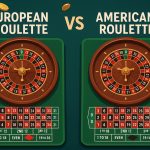
What’s the difference between European and American roulette?
Introduction to Roulette
Roulette is a renowned casino game with deep roots in gambling history, captivating enthusiasts across the globe. The core appeal of roulette lies in its simplicity; the game revolves around a spinning wheel and a small ball. Despite the uniformity in the game’s essence, the intricacies between its variations, primarily the European and American versions, affect not only the gameplay but also the overall player strategy. To strategize effectively, players must delve into these differences.
The Wheels: European vs. American
Roulette wheels are at the heart of this game, dictating not just aesthetics but also altering the game’s dynamics and outcomes. The discovery of differences in these wheels’ construction is crucial for any serious player.
The European Wheel carries 37 pockets, emblazoned with numbers spanning from 0 to 36. This nuanced design helps in maintaining a nearly egalitarian equilibrium between the risk and reward factors, thus keeping the spirit of chance at the forefront.
On the other hand, the American Wheel introduces an additional element of unpredictability with 38 pockets, housing numbers from 0 to 36 along with two extra slots: single zero (0) and double zero (00). This singular addition seems minor yet considerably shifts the trajectory of winning possibilities and doctrines that guide the game.
Implications of the Zero
The integration of a double zero in the American version is far from a mere cosmetic distinction; it deeply impacts the critical component known as the house edge. In European roulette, the solitary zero sets the house edge at approximately 2.7%, providing a relatively favorable environment for the player.
By contrast, American roulette, with its dual-zero configuration, escalates the house advantage to around 5.26%. This incremental rise is not trivial and should sway the decision-making process for players weighing their odds and the potential returns on their efforts. The variance in house edge fundamentally alters the roulette experience, asserting a slant that especially skilled players must account for in forming successful strategies.
Betting Options
Roulette is famed for its diversity in betting styles, allowing ample room for varied approaches. Players often opt to place bets on single numbers, color delineations (red or black), or on number types (odd or even). These traditional options lay a foundational strategy for players.
The American version’s inclusion of the double zero gives rise to unique betting patterns. One such offering is the five-number bet, an exclusive feature covering numbers 0, 00, 1, 2, and 3. This exclusive bet, absent in European roulette, introduces added complexities and could broaden the strategic landscape for players. Each variation in betting motifs demands a tailored approach; understanding these specifics can refine a player’s tactic considerably.
En Prison and La Partage Rules
European roulette stands as a paragon of player-favorable rules, in part due to its additional house regulations, namely En Prison and La Partage. These rules are particularly beneficial for enhancing a player’s potential gains.
The En Prison rule is an attractive proposition for even-money bettors. When the ball lands on zero, a player’s bet is not immediately lost. Instead, it is held “in prison” for a subsequent round, offering a chance at redemption. Should fortune favor the player in the next round, the original stake is returned unharmed.
Similarly, the La Partage rule aids players by reclaiming half of their even-money bet when the ball rests on zero. This rule further skews the odds in favor of the player, thereby subtlety diminishing the house edge. These strategic elements distinguish the European version significantly, making it enticing for those calculating their paths to potential victory.
Aesthetic and Layout Differences
The visual and physical arrangement of roulette tables resonates with players on differing levels. Unlike the pragmatic considerations of wheel differences, aesthetics and layout provide an emotional and atmospheric ambiance unique to each version.
European tables are characterized by their minimalist and streamlined arrangements, focusing on clarity and ease of use. This straightforward design enhances both functionality and the player’s capacity to engage with the game seamlessly.
Conversely, the American table introduces layers of complexity with its elaborate layout, accommodating the additional betting options linked with the double zero. This complex approach can influence the player’s perspective on the game’s intricacy and immersion.
Conclusion
In conclusion, when faced with the choice between European and American roulette, players must evaluate both the game’s probabilistic factors and their personal gaming preferences. European roulette typically offers more favorable odds with its single zero, alongside special rules like En Prison and La Partage that can slightly tip the scales towards the player. Alternatively, American roulette’s heightened house edge, due to the double zero, presents a distinct challenge, forcing players to adapt their strategies accordingly.
A thorough comprehension of these differences is indispensable for players looking to optimize their gaming strategies and align them with their desired casino experience. Exploring deeper into the nuances of roulette can be enlightening and rewarding. For expanded insights and strategies on roulette, visit Roulette Strategy Tips.

How do I play online roulette?
Understanding Online Roulette
Playing roulette online is a popular activity that involves making wagers on the anticipated outcome as a virtual wheel spins. At its core, the primary objective of this thrilling game is to accurately predict the pocket, marked by a number and color, where the ball will settle after the wheel’s rotation. With a myriad of online platforms providing the opportunity to play roulette, grasping the essential aspects of the game becomes crucial for placing informed and strategic wagers.
Choosing an Online Casino
Prior to engaging in online roulette, it is paramount to select a trustworthy online casino. The legitimacy of a casino is typically indicated by a valid license from a recognized regulatory authority. Such licensing assures that the platform operates under strict guidelines to ensure fair play and security. Moreover, pay close attention to the payment methods offered; secure options will protect your financial transactions. Customer support is another crucial aspect, ensuring that any concerns or issues can be promptly addressed. It is also advisable to check online reviews or participate in forums to gather insights from the experiences of other players. Some popular choices in the industry include Casino1 and Casino2.
Understanding the Roulette Table
A fundamental understanding of the roulette table is indispensable for any player. The online roulette table features a comprehensive betting grid that exhibits numbers ranging from 0 to 36. In the American version of the game, an additional ’00’ is present. Players have the option to place bets on individual numbers, combinations thereof, or specific sections such as red, black, even, or odd. This layout of the table is instrumental in determining the various betting possibilities available to players.
Types of Bets
Roulette bets can be broadly categorized into two types: inside bets and outside bets. Inside bets are bets placed on specific numbers or smaller groups of numbers, often yielding higher payouts due to their lower probability of success. Conversely, outside bets cover larger table sections, which increases the probability of winning but results in lower payouts.
Placing Your Bet
The process of placing a bet in online roulette is quite straightforward. Players begin by selecting their desired chip value, after which they click on the corresponding area of the betting grid to place their wager. Upon placing the bet, players generally initiate the wheel spin by clicking a button, unless the game features an automatic spin that doesn’t necessitate manual input.
Game Variants
Online roulette is available in several variants, including but not limited to European, American, and French roulette. The principal distinction among these variants is the number of zeros present on the wheel. The European version, with its single zero, is favored by many players due to its comparatively lower house edge than the American version, which features both a single zero and a double zero.
Setting a Budget and Gaming Responsibly
Prior to initiating play, it is prudent to establish a budget for your gaming session. This prudent measure plays a vital role in fostering responsible gambling habits. As a player, it’s crucial to determine the amount you are comfortable wagering and adhere to it, resisting the temptation to chase losses, which can lead to unplanned financial expenditures.
Utilizing Strategies
While it is universally acknowledged that roulette is predominantly a game of chance, some players opt to employ specific betting strategies like the Martingale or Fibonacci systems. Such strategies, although not a guarantee of success, can provide players with a systematic approach to adjusting their bets based on the outcomes of previous spins, thereby aiding in the management of their bankroll.
Conclusion
In conclusion, engaging in online roulette can provide an exhilarating gaming experience, granted that the player understands the game’s rules and commits to responsible gambling practices. By selecting a reputable casino and gaining familiarity with the diverse array of betting options, players can enhance their overall enjoyment of the game. It is imperative to always play within your financial means and embrace online roulette as a form of entertainment rather than a means to generate income. This approach not only ensures a more enjoyable experience but also helps in maintaining a healthy relationship with online gaming.